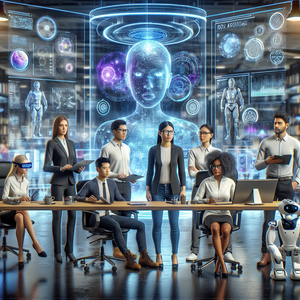
AI as the Planner's Secret Weapon: Transforming Transportation Planning in 2025

Transportation planning has always been a balancing act. Planners aim to coordinate infrastructure development, economic growth, environmental sustainability, and public satisfaction while working within limited budgets. However, the demands of 2025 have amplified these challenges. The rise of e-commerce has strained urban logistics, with delivery vehicles clogging streets and contributing to carbon emissions. Meanwhile, the shift to electric vehicles (EVs) and autonomous technologies requires rethinking infrastructure, from EV charging stations to traffic management systems. Add to this the increasing focus on sustainability and equity, and transportation planning has become a web of interrelated priorities. Traditional methods of planning—relying on historical data, static models, and manual calculations—can no longer keep pace with these complexities. Enter AI, a tool that can process massive datasets, simulate intricate scenarios, and uncover actionable insights. AI empowers planners to move beyond reactive problem-solving and adopt a proactive, data-driven approach to shaping the future of transportation.
AI-Powered Scenario Modeling: A Paradigm Shift
One of the most revolutionary applications of AI in transportation planning is scenario modeling. Using AI, planners can simulate countless "what-if" scenarios, assessing the potential impacts of various decisions before implementing them in the real world. This reduces the risks of costly mistakes while enabling data-backed decision-making. For instance, in Los Angeles, transportation planners used AI-driven modeling to redesign bus routes. By analyzing millions of data points, including passenger demand, traffic congestion, and socioeconomic factors, AI helped the city optimize routes to improve efficiency and ridership while cutting operational costs. Such modeling also allows planners to test long-term impacts, such as how the adoption of autonomous vehicles might alter traffic patterns over the next decade. This ability to virtually test plans opens up new possibilities for cities grappling with growth and change. Whether it’s modeling the effects of building a new transit line or redesigning a busy urban corridor, AI provides the precision and foresight needed for effective planning. No longer reliant on guesswork or incomplete data, transportation planners are equipped to make informed, strategic decisions.
Solving the Last-Mile Problem
The rise of e-commerce in recent years has created a significant challenge for transportation planners: the last-mile problem. This final leg of delivery—getting goods from a distribution hub to their destination—has become a critical bottleneck in urban logistics, contributing to congestion, inefficiency, and environmental harm. AI offers innovative solutions to this challenge. For example, AI-powered algorithms can optimize delivery routes in real time, taking into account traffic conditions, weather, and delivery windows. While companies like UPS and Amazon have been pioneers in this space, cities are also leveraging AI to manage delivery fleets more effectively. In New York City, planners have adopted an AI platform to pinpoint optimal locations for curbside delivery zones. This has reduced double-parking, improved traffic flow, and minimized environmental impacts. Furthermore, AI can help cities integrate micro-distribution hubs and prioritize the use of electric delivery vehicles in high-density areas. By analyzing delivery patterns and traffic data, AI enables planners to design systems that balance efficiency with sustainability. This collaboration between public and private sectors, powered by AI, is setting a new standard for urban logistics in 2025.
Transforming the Planner's Role
As AI takes over data-heavy tasks like traffic modeling, demand forecasting, and network optimization, the role of transportation planners is evolving. In 2025, planners are shifting from being technical experts to strategic thinkers, collaborators, and innovators. Instead of spending weeks crunching numbers for a traffic study, planners now focus on creative problem-solving, stakeholder engagement, and long-term visioning. AI tools are also becoming more accessible. Platforms like Remix and StreetLight Data offer intuitive interfaces that allow planners to harness AI insights without requiring advanced programming skills. This democratization of AI empowers planners at all levels of expertise, enabling them to focus on broader goals such as equity, sustainability, and economic development. For example, in Q1 2025, hiring trends in transportation planning have highlighted the need for professionals skilled in analytics and cross-sector collaboration. Organizations are seeking planners who can integrate AI tools into their workflow while balancing competing priorities like EV infrastructure development and urban delivery challenges. AI is enhancing human expertise, allowing planners to address complex challenges with greater precision and creativity.
Addressing Challenges and Ethical Concerns
While AI holds immense potential, its adoption is not without challenges. Ethical concerns such as data privacy, algorithmic bias, and over-reliance on technology must be carefully managed to ensure AI’s responsible use. For instance, biased data inputs can lead to unequal outcomes—for example, prioritizing affluent neighborhoods over underserved communities when planning transit routes. To prevent this, planners must ensure that AI algorithms are transparent and that datasets are representative of diverse populations. Additionally, AI should be viewed as a complement to, not a replacement for, human expertise. Planners bring valuable knowledge of local contexts, community needs, and political realities that AI alone cannot replicate. By addressing these concerns, planners can harness the full potential of AI while maintaining public trust and ensuring equitable outcomes.
The Road Ahead: AI as a Catalyst for Innovation
As transportation systems become increasingly complex, the importance of AI in planning will only grow. From optimizing public transit networks to managing the transition to electric and autonomous vehicles, AI empowers planners to approach challenges with confidence and creativity. By leveraging AI, planners can move beyond reactive problem-solving, proactively shaping transportation systems that are efficient, sustainable, and equitable. In this landscape, AI is not just a tool—it’s a catalyst for innovation. It allows planners to tackle today’s most pressing challenges while preparing for the demands of tomorrow. As cities and regions grapple with rapid change, the dynamic, data-driven power of AI offers a pathway to smarter, more adaptive transportation systems.
AI is transforming transportation planning in profound and lasting ways. By enabling planners to analyze complex data, simulate scenarios, and uncover actionable insights, AI has become an indispensable tool in addressing the multifaceted challenges of modern mobility. The transportation planner of 2025 is no longer burdened by routine tasks but empowered to think strategically, embrace innovation, and prioritize sustainability and equity. As cities and regions adapt to a rapidly changing world, AI offers a powerful solution for creating smarter, more efficient, and more equitable transportation systems. The future of transportation planning is here, and it’s powered by AI—a secret weapon that is unlocking new possibilities for planners and communities alike.
Transportation Data Scientist
Smart mobility startups, city governments, consulting firms like McKinsey or WSP, and companies like Uber and Waymo
Core Responsibilities
Develop and implement predictive models to analyze traffic patterns, public transit efficiency, and urban mobility trends.
Use machine learning algorithms to optimize transportation systems, such as route planning or congestion management.
Collaborate with urban planners and policymakers to translate analytical insights into actionable strategies.
Required Skills
Proficiency in data analysis tools like Python, R, and SQL, along with expertise in AI frameworks like TensorFlow or PyTorch.
Strong knowledge of transportation datasets (e.g., GPS data, transit ridership data) and geospatial analysis tools such as GIS.
Experience with real-world applications, such as optimizing delivery logistics or analyzing autonomous vehicle data.
Urban Mobility AI Specialist
Urban think tanks, transportation authorities (e.g., NYC DOT, TfL), or tech companies like Amazon and Tesla
Core Responsibilities
Design AI-driven solutions to improve urban mobility, such as dynamic traffic signal systems or multimodal transit integration.
Conduct scenario modeling to predict the long-term impacts of new mobility technologies, such as autonomous fleets or micro-mobility systems.
Develop tools for optimizing last-mile logistics and delivery networks in urban environments.
Required Skills
Expertise in artificial intelligence applications, particularly in transportation network optimization and simulation tools like MATSim or PTV Vissim.
Strong project management skills to collaborate with public and private stakeholders on urban mobility initiatives.
Knowledge of sustainability frameworks and how they intersect with transportation planning.
Transportation Systems Modeler
Engineering consultancies (e.g., Arup, AECOM), metropolitan planning organizations (MPOs), or government agencies like FHWA
Core Responsibilities
Create and refine transportation planning models that simulate traffic flows, transit demand, and freight logistics.
Work on infrastructure projects, such as evaluating the impact of new transit lines or highway expansions using AI-powered simulations.
Incorporate real-time data to develop adaptive systems for managing congestion and optimizing public transit routes.
Required Skills
Advanced knowledge of modeling software like Cube, EMME, or Visum, and proficiency in statistical software such as SPSS or SAS.
Familiarity with transportation policy and regulations to align modeling efforts with local and federal guidelines.
Ability to integrate big data analytics, such as real-time GPS or IoT data, into dynamic modeling frameworks.
Sustainable Transportation Planner with AI Expertise
Environmental consulting firms, sustainability-focused NGOs, and government agencies like the EPA or state DOTs
Core Responsibilities
Develop transportation plans that integrate AI solutions to promote sustainability, such as EV charging infrastructure placement or carbon footprint reduction strategies.
Use AI to map and prioritize equitable access to transit services for underserved communities.
Assess the environmental impacts of transportation projects and propose AI-based mitigation strategies.
Required Skills
Strong understanding of sustainability metrics and tools like LEED for Cities or greenhouse gas accounting software.
Experience with AI platforms that analyze environmental data, such as IBM Watson or ArcGIS Pro.
Knowledge of funding mechanisms for sustainable transportation, such as grants for EV infrastructure or carbon credits.
AI-Powered Logistics Coordinator
E-commerce giants like Amazon, FedEx, or DHL, as well as city logistics initiatives in partnership with local governments
Core Responsibilities
Utilize AI algorithms to optimize supply chain logistics, including last-mile delivery, fleet management, and warehouse operations.
Analyze real-time data to streamline delivery routes, reduce congestion, and lower emissions in urban areas.
Collaborate with municipal planners to align private logistics operations with public transportation policies.
Required Skills
Experience with logistics optimization tools like Route4Me or OptimoRoute, as well as AI platforms like AWS AI or Google AutoML.
Knowledge of urban freight challenges, including curb management and micro-distribution hubs.
Ability to work in cross-functional teams, bridging the gap between private logistics providers and public sector planners.