Beyond the Code: The Creative Journey of Video Game Designers

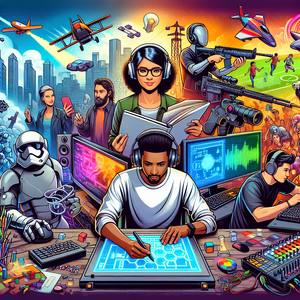
Video game design has evolved into a multifaceted discipline that blends art, storytelling, technology, and psychology. Designers come from a wide array of backgrounds, often bringing unique perspectives that enrich their work. For instance, consider the case of Jenova Chen, co-founder of thatgamecompany, known for the critically-acclaimed titles "Journey" and "Flower." Chen's background in psychology and his passion for emotional storytelling have allowed him to create games that resonate deeply with players. His journey from a computer science major to a leading game designer highlights the importance of interdisciplinary knowledge in the gaming industry. Similarly, other designers like Kellee Santiago, also from thatgamecompany, transitioned from traditional art fields into game design. Santiago's experience in fine arts has infused her projects with aesthetic depth and emotional nuance, demonstrating that a strong foundation in art can significantly enhance game design. These examples illustrate that there is no single path to becoming a game designer; rather, diverse experiences can lead to groundbreaking creativity. Another notable example is Hideo Kojima, renowned for his work on the "Metal Gear" series. Kojima's background in film and literature informs his unique storytelling techniques and cinematic approach to game design. His ability to weave intricate narratives into gameplay has set him apart in the industry, showcasing how a blend of interests can lead to innovative outcomes.
The Role of Creativity in Salary Trajectories
While technical skills are crucial in game design, creativity plays a pivotal role in determining a designer's value in the industry. Companies increasingly seek out individuals who can think outside the box and bring fresh ideas to their projects. This demand for creativity can lead to higher salary expectations for designers who successfully differentiate themselves through unique concepts and artistic vision. In a competitive job market, designers who can showcase their creative portfolios, including innovative gameplay mechanics, engaging narratives, and stunning visual designs, often command higher salaries. Renowned designer Hideo Kojima has certainly exemplified this, as his unique contributions to the industry allow him to negotiate favorable compensation packages. Moreover, game designers who engage in continual learning and experimentation can further enhance their earning potential. Embracing new trends, exploring various genres, and participating in collaborative projects can lead to increased visibility and opportunities for career advancement. As the industry evolves, those who remain adaptable and innovative are likely to see their salary trajectories rise. According to industry reports, the average salary for a video game designer can range from $50,000 to over $120,000, depending on experience, creativity, and the complexity of projects handled. Those who successfully integrate their unique artistic visions into their work may find themselves on the higher end of that spectrum.
Embracing Individuality and Diversity in Game Design
The richness of video game design lies in its diversity. Designers from various backgrounds contribute to a more inclusive gaming landscape, fostering creativity that resonates with a broader audience. A study conducted by the International Game Developers Association (IGDA) found that diverse teams tend to produce more innovative solutions and experiences, ultimately leading to better market performance. Moreover, the push for representation in games has become a crucial aspect of the industry. Designers who draw upon their cultural heritage, personal experiences, and unique perspectives are more likely to create games that reflect the diversity of the player base. This inclusivity not only enriches the gaming experience but also opens doors for designers to connect with audiences on a deeper level, further enhancing their marketability and salary potential. For example, the acclaimed game "Celeste," developed by Maddy Thorson, draws on her experiences with mental health and personal challenges. This authenticity not only resonated with players but also garnered critical acclaim, showcasing how personal stories can lead to creative success.
The journey to becoming a successful video game designer is as varied as the games themselves. By embracing unconventional paths and harnessing their creativity, designers can carve out unique identities that not only enhance their artistic contributions but also influence their salary expectations in the industry. As the landscape of game design continues to evolve, the importance of diverse backgrounds and innovative thinking will only grow, paving the way for a new generation of designers who will shape the future of gaming. For aspiring game designers, the message is clear: your individuality is your greatest asset. Embrace it, and let it guide you on your creative journey. The world of video game design is not just about mastering code; it’s about telling stories, expressing emotions, and creating experiences that resonate with players worldwide.
Narrative Designer
Naughty Dog, BioWare, Telltale Games
Core Responsibilities
Craft engaging storylines and character arcs that enhance gameplay and player experience.
Collaborate with game developers and artists to integrate narrative elements into the game design.
Conduct research to ensure story authenticity and cultural representation.
Required Skills
Strong writing and storytelling skills, with a portfolio showcasing narrative work in games.
Experience in scriptwriting or interactive storytelling techniques.
Familiarity with game engines and design software (e.g., Unity, Unreal Engine).
Game Artist (2D/3D)
Ubisoft, Electronic Arts, Insomniac Games
Core Responsibilities
Create detailed character models, environments, and visual effects for video games.
Develop concept art and animations that align with the game’s artistic vision.
Collaborate with designers and programmers to ensure artistic elements fit within technical constraints.
Required Skills
Proficiency in art software such as Adobe Creative Suite, Blender, or Maya.
Strong foundational skills in traditional art, anatomy, and color theory.
A robust portfolio showcasing a variety of artistic styles and techniques.
Gameplay Programmer
Epic Games, Riot Games, Square Enix
Core Responsibilities
Implement and optimize gameplay mechanics, ensuring a smooth and engaging player experience.
Collaborate with designers to translate game concepts into functional gameplay systems.
Debug and troubleshoot gameplay issues, iterating on systems based on player feedback.
Required Skills
Proficiency in programming languages such as C++ or C# and experience with game development frameworks.
Understanding of game physics, AI, and player interactions.
Strong problem-solving skills and a passion for gameplay optimization.
User Experience (UX) Designer for Games
Blizzard Entertainment, Activision, Valve
Core Responsibilities
Conduct user research to understand player needs and preferences, informing design decisions.
Create wireframes, prototypes, and user flows to enhance the overall gaming experience.
Collaborate with teams to ensure intuitive navigation and gameplay mechanics.
Required Skills
Experience with UX design tools such as Sketch, Figma, or Adobe XD.
Strong analytical skills, with the ability to interpret data and player feedback.
Knowledge of game design principles and player psychology.
Game Producer
Rockstar Games, Bungie, Square Enix
Core Responsibilities
Oversee the game development process, managing timelines, budgets, and team dynamics.
Act as a liaison between various departments, ensuring that all teams are aligned on project goals.
Monitor project progress, identifying risks and implementing solutions to stay on schedule.
Required Skills
Strong project management skills, often demonstrated through experience with Agile methodologies.
Excellent communication and leadership abilities to motivate and guide diverse teams.
Familiarity with game development pipelines and tools such as Jira or Trello.