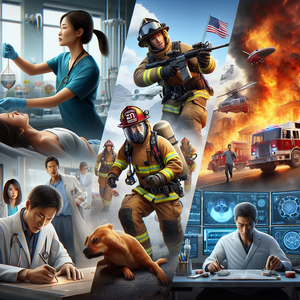
High-Impact Careers: A Deep Dive into Life-Saving and Thrilling Job Opportunities
In our ever-evolving job market, careers that merge the thrill of high-stakes situations with the noble mission of saving lives are gaining traction. These professions operate in environments charged with urgency, requiring individuals to stay composed and make pivotal decisions that can alter outcomes dramatically. Whether it’s the immediate response of emergency personnel or the specialized efforts of wildlife rescuers, the spectrum of opportunities in this domain is both broad and deeply rewarding.
Job Summaries:
Emergency Medical Technician (EMT):
- EMTs are often the first responders in medical emergencies, delivering vital care in critical moments.
- Their tasks include evaluating patient conditions, administering basic life support, and safely transporting individuals to healthcare facilities.
- Certification through state-approved programs is essential, alongside strong communication abilities to navigate high-pressure scenarios.
- The Bureau of Labor Statistics (BLS) forecasts a 7% growth in EMT employment from 2021 to 2031.
Paramedic:
- Building on the foundation of EMT training, paramedics receive extensive education, enabling them to perform advanced procedures like intubation and medication administration.
- They lead emergency responses and play a crucial role in stabilizing patients.
- A paramedic typically requires an associate degree in paramedic science and state certification.
- On average, paramedics earn around $48,000 annually.
Firefighter:
- Firefighters tackle emergencies involving fires, hazardous materials, and rescue operations.
- Their duties encompass extinguishing blazes, conducting rescues, and performing CPR.
- Training demands include fire science coursework and maintaining physical fitness standards.
- Job growth for this profession is projected at 4% over the next decade, with an average salary of approximately $54,000.
Lifeguard:
- Lifeguards ensure safety in swimming environments.
- Respond swiftly to emergencies such as drownings or injuries.
- Certified in CPR and first aid.
- Play a vital role in accident prevention and emergency response.
- Summer months typically see heightened employment opportunities.
- This role is particularly relevant during the warmer season.
Search and Rescue Officer:
- These specialists locate and assist individuals in peril across diverse terrains.
- Their training often includes wilderness survival and emergency response tactics.
- As outdoor activities rise and the frequency of natural disasters increases, the demand for search and rescue officers is expected to grow significantly.
Coast Guard Officer:
- Coast Guard officers safeguard maritime interests through search and rescue missions.
- They are involved in law enforcement and environmental emergency responses.
- Rigorous training programs ensure they are equipped for these critical responsibilities.
- Opportunities for advancement are available, contingent on performance and further education.
Crisis Counselor:
- These professionals provide immediate psychological support to individuals in distress.
- Crisis counselors assess needs, offer emotional assistance, and connect clients to resources.
- Typically requiring a degree in psychology or social work, alongside crisis intervention training, this role is increasingly vital as demand for mental health services rises.
Wildlife Rescue Technician:
- Wildlife rescue technicians focus on the rehabilitation of injured or orphaned animals.
- Responsibilities include administering medical care and educating the public about conservation.
- A background in biology or environmental science, paired with practical animal care experience, is often necessary.
Military Medic:
- Military medics provide emergency medical care to service members in various scenarios.
- Their responsibilities include assessing injuries and executing first aid.
- Specialized training in combat lifesaving techniques is essential.
Disaster Response Coordinator:
- These coordinators devise and implement strategic responses to emergencies for organizations and communities.
- Their responsibilities encompass training personnel, coordinating with emergency services, and developing comprehensive response plans.
- A strong background in emergency management and leadership skills are crucial.
High-impact careers in life-saving professions are abundant and varied, each requiring a unique combination of skills and training. These roles not only offer thrilling challenges but also provide the opportunity to make a profound difference in people's lives. The adrenaline-inducing nature of these positions, coupled with their life-saving potential, attracts individuals who are passionate about community service.
Explore More Jobs