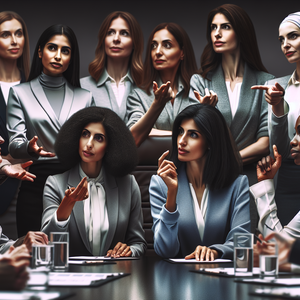
Viking Women: Warriors, Leaders, and Trailblazers

Viking society, often characterized by its egalitarian structure relative to many contemporary cultures, afforded women considerable authority. Women in Viking communities held rights to property, divorce, and inheritance, allowing them to manage farms and businesses, particularly when their husbands were away on raids or trade expeditions. This legal autonomy was pivotal in a society where men frequently ventured into the unknown. Archaeological findings reinforce the notion that Viking women engaged in a variety of roles beyond traditional domesticity. Numerous burial sites have unearthed graves containing weapons, armor, and tools, suggesting that women may have participated in warfare or served as shieldmaidens. For instance, the grave of a woman found in Birka, Sweden, contained a complete set of weapons, demonstrating the possibility that she was a warrior. Such discoveries challenge the stereotype of the passive Viking woman, illustrating a society where women could assume roles typically reserved for men.
Notable Figures: Lagertha and Freydis
Among the most iconic figures in Viking history is Lagertha, depicted in the sagas as a fierce shieldmaiden. According to the tales, she fought alongside male warriors and was renowned for her valor and skill in battle. Lagertha's story is not merely a figment of legend; it embodies the spirit of warrior women within Viking culture, showcasing that female participation in warfare was indeed celebrated and acknowledged in Norse literature. Freydis Eiríksdóttir stands out as another remarkable Viking woman known for her boldness and leadership. She played a crucial role in the Norse expeditions to North America, specifically in the settlement of Vinland, located in present-day Newfoundland. The sagas recount her actions during a confrontation with indigenous peoples, where she demonstrated both physical strength and strategic acumen. Freydis's aggressive stance and her fearless nature, portrayed in her willingness to confront adversaries, underscore the potential for women to lead and inspire in a male-dominated world. Her legacy serves as a powerful example of female empowerment during a time often overshadowed by male accomplishments.
Challenging Stereotypes and Myths
Despite the evidence of Viking women's active roles in society, modern interpretations frequently overlook their contributions, reinforcing stereotypes of a patriarchal culture. By examining the narratives of women like Lagertha and Freydis, we can dismantle these misconceptions and recognize the multifaceted nature of gender roles in Viking culture. Contemporary portrayals in popular media, such as the television series "Vikings," have reignited interest in these figures, albeit with artistic liberties. While these representations may not adhere strictly to historical accuracy, they serve as a platform to discuss women's agency in Viking society. Such portrayals encourage a reevaluation of historical narratives and highlight the need for a more inclusive understanding of Viking history.
The legacy of Viking women is rich and varied, filled with tales of bravery, leadership, and resilience. By shining a light on the contributions of figures like Lagertha and Freydis, we honor their stories and challenge traditional views of gender roles throughout history. As we delve deeper into the past, it becomes clear that Viking women were far more than mere footnotes; they were warriors, leaders, and trailblazers who shaped their world in profound ways. Acknowledging their impact not only enriches our understanding of Viking society but also serves as a reminder that history is often more intricate than it appears. The stories of these remarkable women inspire us to reevaluate the narratives we inherit and recognize the diverse voices that have contributed to our shared history.
Historical Research Analyst
Universities, museums, historical societies, and cultural heritage organizations
Core Responsibilities
Conduct in-depth research on historical events, figures, and cultures, with a focus on Viking society and women's roles.
Analyze historical documents, artifacts, and literature to draw insights and present findings in reports or publications.
Required Skills
Strong analytical skills with expertise in historical methodologies.
Proficiency in reading ancient languages or translating historical texts is a plus.
Cultural Heritage Consultant
Cultural institutions, government agencies, and non-profit organizations focused on heritage conservation
Core Responsibilities
Advise organizations on preserving and interpreting Viking heritage, focusing on the overlooked contributions of women.
Develop educational programs and workshops that highlight gender roles in historical narratives.
Required Skills
Background in cultural studies, anthropology, or archaeology.
Excellent communication skills for engaging with diverse audiences.
Museum Curator (Viking History Specialist)
National and local museums, historical parks, and cultural heritage sites
Core Responsibilities
Curate exhibits that showcase Viking history, emphasizing the roles of women as warriors, leaders, and traders.
Collaborate with other historians and educators to develop informative displays and materials.
Required Skills
Advanced degree in history, archaeology, or museum studies.
Experience in exhibit design and public engagement strategies.
Gender Studies Researcher
Academic institutions, think tanks, and research organizations focused on gender studies
Core Responsibilities
Investigate and analyze the roles of women in various historical contexts, including Viking society, to contribute to academic literature.
Present findings at conferences and publish in peer-reviewed journals.
Required Skills
Strong research skills with a focus on gender theory and historical analysis.
Ability to work collaboratively with interdisciplinary teams.
Educational Content Developer (History Curriculum)
Educational publishers, school districts, and non-profit educational organizations
Core Responsibilities
Design and create educational materials that incorporate diverse historical perspectives, including the contributions of Viking women.
Collaborate with teachers and educational institutions to implement curriculum changes that reflect inclusive historical narratives.
Required Skills
Knowledge of curriculum development and instructional design.
Strong writing and editing skills, with the ability to engage a variety of audiences.